

-
TRANSPLANTING
-
VEGETATIVE GROWTH
-
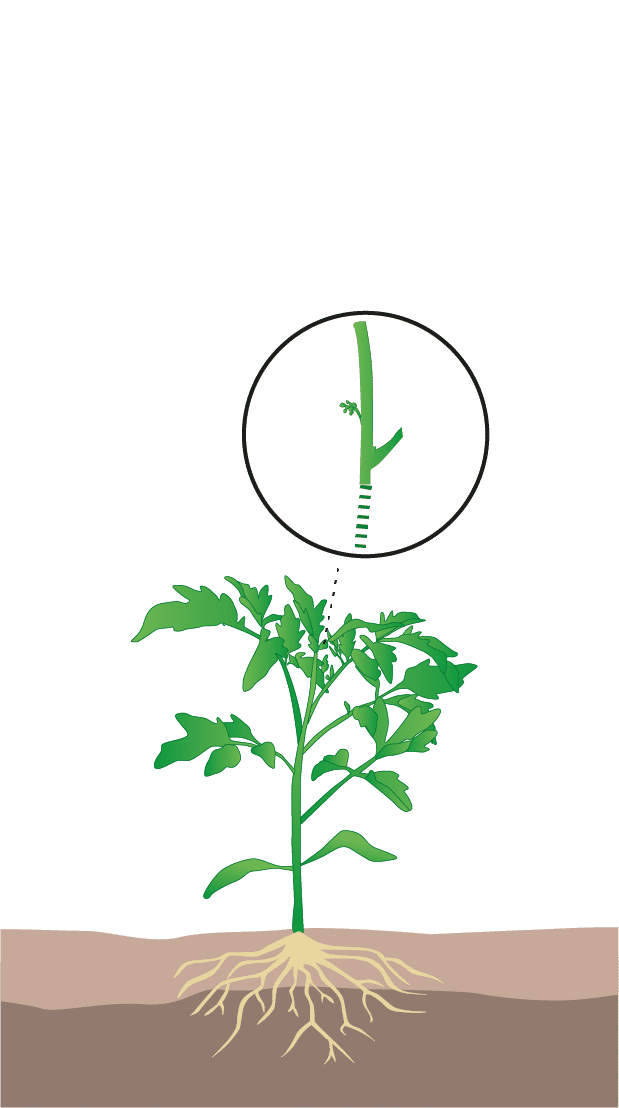
INFLORESCENCE DEVELOPMENT
-
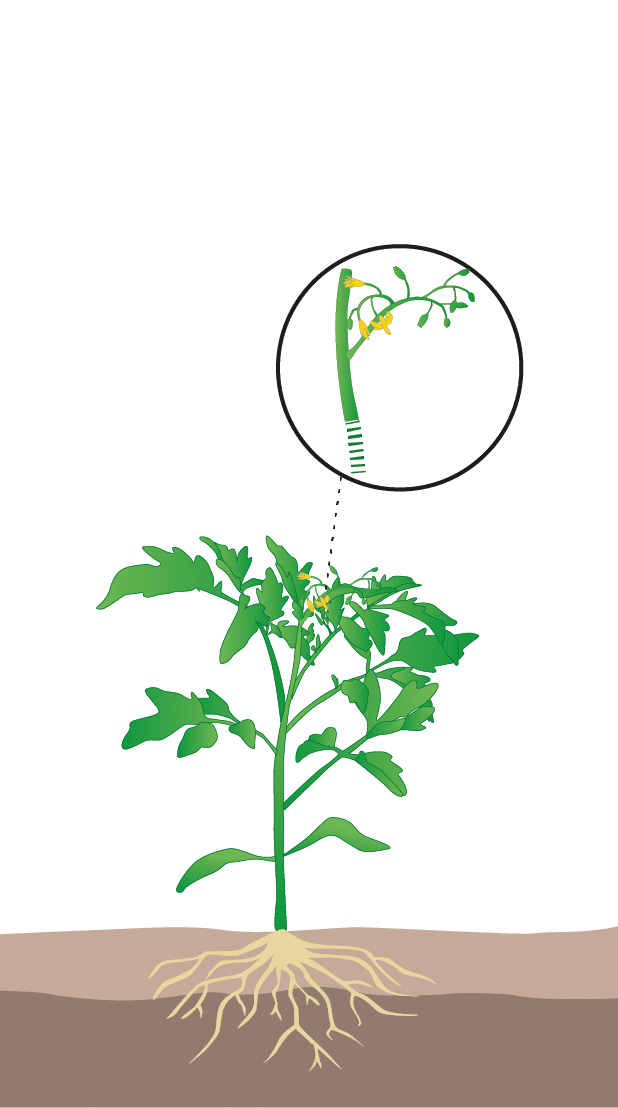
FLOWERING
-
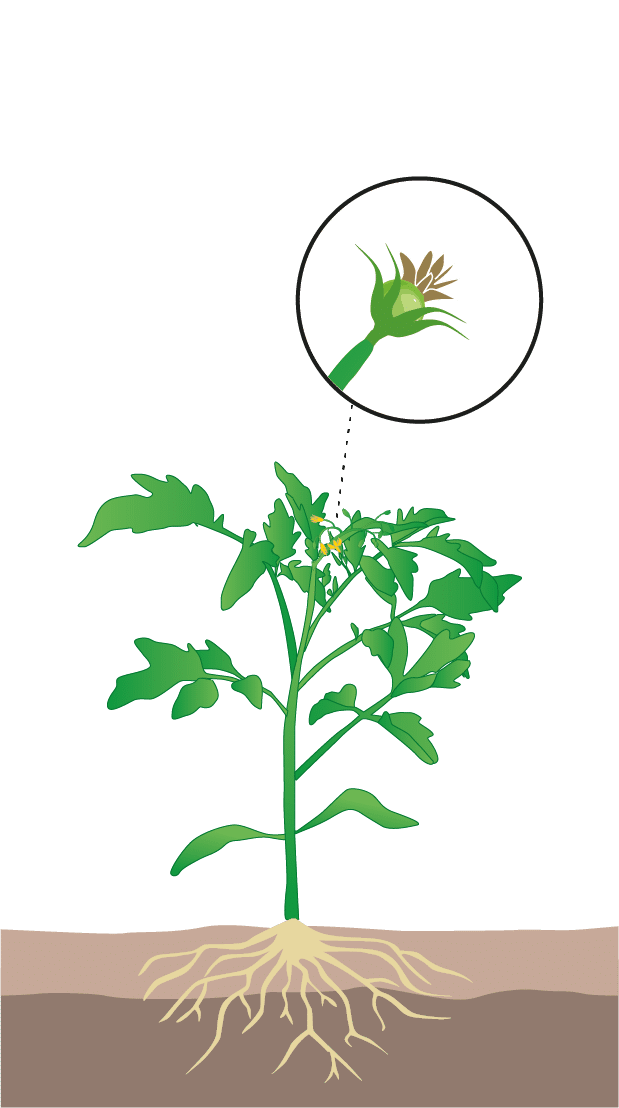
FRUIT SET
-
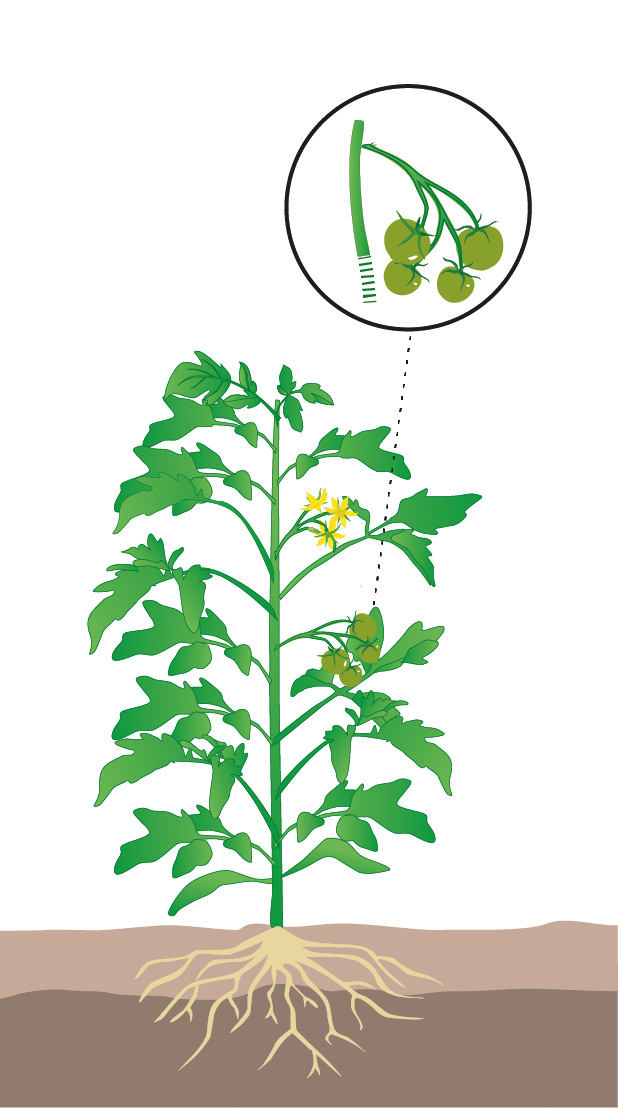
FRUIT DEVELOPMENT
-
RIPENING
Basic fertilization
Top-dressing fertilization
Root applied biostimulants
Foliar biostimulants
Water-soluble fertilizers
TOMATO CULTIVATION
Tomato cultivation in Greece extends from early spring to late autumn for open-field production, while in greenhouse systems it can be carried out year-round.
Tomato thrives under the following conditions:
- Warm temperatures (optimal range: 20–28°C),
- Well-drained soils rich in organic matter,
- Regions with high solar radiation, such as Crete, the Peloponnese, Thessaly, and Macedonia.
Key agronomic requirements:
- Adequate and uniform irrigation,
- Use of plant support systems (staking or trellising),
- Implementation of Integrated Pest and Disease Management (IPM) to control major threats such as Tuta absoluta, Botrytis cinerea, and powdery mildew.
Tomato is particularly sensitive to stress; therefore, maintaining consistent soil moisture and balanced plant nutrition is essential for achieving high yield and superior fruit quality.
TOMATO FERTILIZATION
Tomatoes have high nutritional requirements, particularly during fruit set and ripening.
Key nutrients:
- Nitrogen (N): promotes vegetative growth
- Phosphorus (P): essential for root development and early growth stages
- Potassium (K): crucial for fruit size, firmness, color, and flavor
- Calcium (Ca): prevents blossom-end rot, a common physiological disorder in tomato
- Magnesium (Mg): enhances photosynthetic activity
- Micronutrients (B, Zn, Fe): important for flowering and fruit set
Fertilization guidelines:
- Application of basal N–P–K fertilization prior to transplanting,
- Fertigation during flowering and periods of high fruit load,
- Increased potassium and calcium supply during fruit development and ripening,
- Use of biostimulants to support vegetative and root growth, as well as tolerance to abiotic stress.
Modern tomato production in Greece relies on precise fertigation strategies, aiming to maximize nutrient uptake efficiency while minimizing nutrient losses.
HARVESTING AND POSTHARVEST MANAGEMENT
Harvesting is carried out when fruits reach the appropriate color, °Brix level, and firmness, depending on their final market destination:
- Fresh consumption: harvested at the breaker stage (onset of color change)
- Local market: harvested at full ripeness to ensure maximum flavor intensity
- Processing: harvested at full maturity with a deep red color. In processing tomatoes, °Brix plays a key role in determining quality. Pricing is often adjusted based on soluble solids content; therefore, it is advantageous for growers to invest in targeted nutrition products, such as biostimulants or water-soluble fertilizers with an emphasis on potassium.
Postharvest management includes cooling, sorting, and grading to maintain freshness, reduce weight loss, and ensure consistent product quality.
FREQUENTLY ASKED QUESTIONS ABOUT TOMATO CULTIVATION
What are the best fertilization practices for tomato cultivation?
A combination of basal fertilization, fertigation, and foliar feeding ensures balanced plant nutrition. Potassium and calcium are particularly critical during the fruiting stage.
Which tomato varieties perform best in Greece?
In greenhouse cultivation, high-yielding and disease-resistant hybrids are preferred, while in open-field production, Roma types and traditional ribbed Mediterranean varieties perform well.
What is the optimal planting period?
Transplanting in open-field cultivation typically begins in March-April, while in greenhouse systems production can be continuous throughout the year.
How can blossom-end rot be prevented?
By ensuring adequate calcium supply and avoiding irregular irrigation.
What climate is ideal for tomato cultivation?
A warm, sunny environment with low relative humidity, typical of the Greek spring and summer.